
How to Deep Clean Mold: A Complete Step-by-Step Removal Guide
Learn exactly how to deep clean and eliminate mold safely. Discover the best cleaning solutions, safety gear, and steps to keep it from returning.
DEEP CLEANING ( MOLD )
Bairo F.
7/24/20263 min read

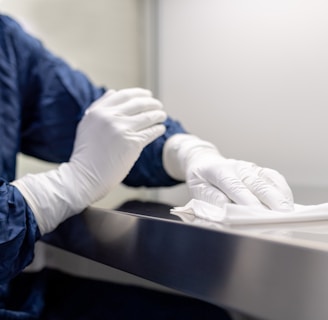
How to Deep Clean Mold: A Complete Step-by-Step Removal Guide
Finding mold in your home can be incredibly frustrating. It is unsightly, smells musty, and poses serious health risks like respiratory irritation, severe allergies, and asthma flare-ups.
When it comes to mold, a surface wipe is never enough. To protect your family, you need a complete deep cleaning process that destroys mold at its roots. This ultimate step-by-step guide covers how to eradicate household mold safely and permanently.
Step 1: Safety First (Assemble Your PPE)
Before you touch any mold, you must protect yourself from inhaling toxic airborne spores. Never attempt a deep mold cleaning without the following Personal Protective Equipment (PPE):
N95 Mask or Respirator: To block microscopic mold spores from entering your lungs.
Rubber Gloves: Long gloves to protect your skin from both the mold and harsh cleaning chemicals.
Safety Goggles: Unvented goggles to prevent spores from irritating your eyes.
Pro-tip: Seal off the room you are cleaning by closing doors and taping plastic sheeting over vents to stop spores from traveling to the rest of the house.
Step 2: Choose Your Weapon (The Best Mold-Killing Solutions)
Do not rely on standard household cleaners. You need a solution that completely destroys the fungal structure. Choose one of the following methods depending on your preferences and the surface type:
Option A: Distilled White Vinegar (Best for Porous Surfaces)
Unlike bleach, vinegar penetrates deep into porous materials like drywall and wood to kill mold at the root.
How to use: Pour undiluted white vinegar into a spray bottle. Spray it directly onto the mold and let it sit for exactly one hour without scrubbing.
Option B: Commercial Mold Remover (Best for Fast Results)
Look for EPA-registered fungicides or solutions containing Concrobium Mold Control. These products break down mold stains and leave an invisible barrier that prevents new spores from taking root.
Option C: Diluted Bleach (Best for Non-Porous Surfaces Only)
Bleach is excellent for tile, grout, glass, and countertops. However, never use bleach on drywall or wood, as its water content will sink in and actually feed future mold growth.
How to use: Mix 1 cup of bleach with 1 gallon of water.
Step 3: Scrub and Scrub Deep
Once your cleaning solution has sat on the mold for a few minutes (or one hour for vinegar), it is time to scrub.
Use a stiff-bristled brush to break apart the mold clusters.
Scrub in a circular motion, applying firm pressure to work the solution deep into the texture of the surface.
Wipe away the loosened mold residue using disposable paper towels or old rags. Throw these away immediately in a sealed trash bag. Do not wash and reuse them.
Step 4: Rinse and Completely Dry the Area
Failing to dry the area completely is the number one reason mold returns. Fungi thrive in moisture, so your job isn't done until the surface is entirely bone-dry.
Wipe the area down with a damp cloth and clean water to remove any residual chemical film.
Use a clean, dry towel to absorb as much surface water as possible.
Set up an electric fan or a dehumidifier facing the cleaned wall or floor. Let it run for at least 24 hours to pull all remaining moisture out of the material.
Step 5: Apply a Mold Preventative Barrier
To guarantee the mold never comes back, finish your deep clean with a preventative shield.
If you are cleaning drywall or wood, wait until it is 100% dry and apply a layer of mold-resistant primer (such as KILZ or Zinsser). Once dry, paint over it with a high-quality, mold-resistant topcoat. This is especially vital in high-humidity zones like bathrooms and basements.
When to Call a Professional
If the mold coverage in your home is larger than 10 square feet (roughly a 3x3 foot patch), do not attempt a DIY deep clean. Large infestations require industrial containment equipment, negative air pressure machines, and professional remediation specialists to ensure your home remains safe.
O2 Clean Breathing Inc.
Specialized HVAC Hygiene, Mold Remediation & Water Restoration in Greater Boston
Navigation
Service Desk
O2 Clean Breathing Inc.
7 Murray Street, Chelsea, MA 02150 Direct: (857) 249-9605
© 2023 O2 Clean Breathing Inc.-Certified HVAC duct hygiene, mold containment, and water damage restoration across Greater Boston.
Greater Boston Service Area